Let's Work Together
Ready to
Move Forward?
Whether you're looking for a logistics partner, a government-ready contractor, or a team that simply gets things done — we'd love to hear from you.

info@isaacslogistics.com
.avif)
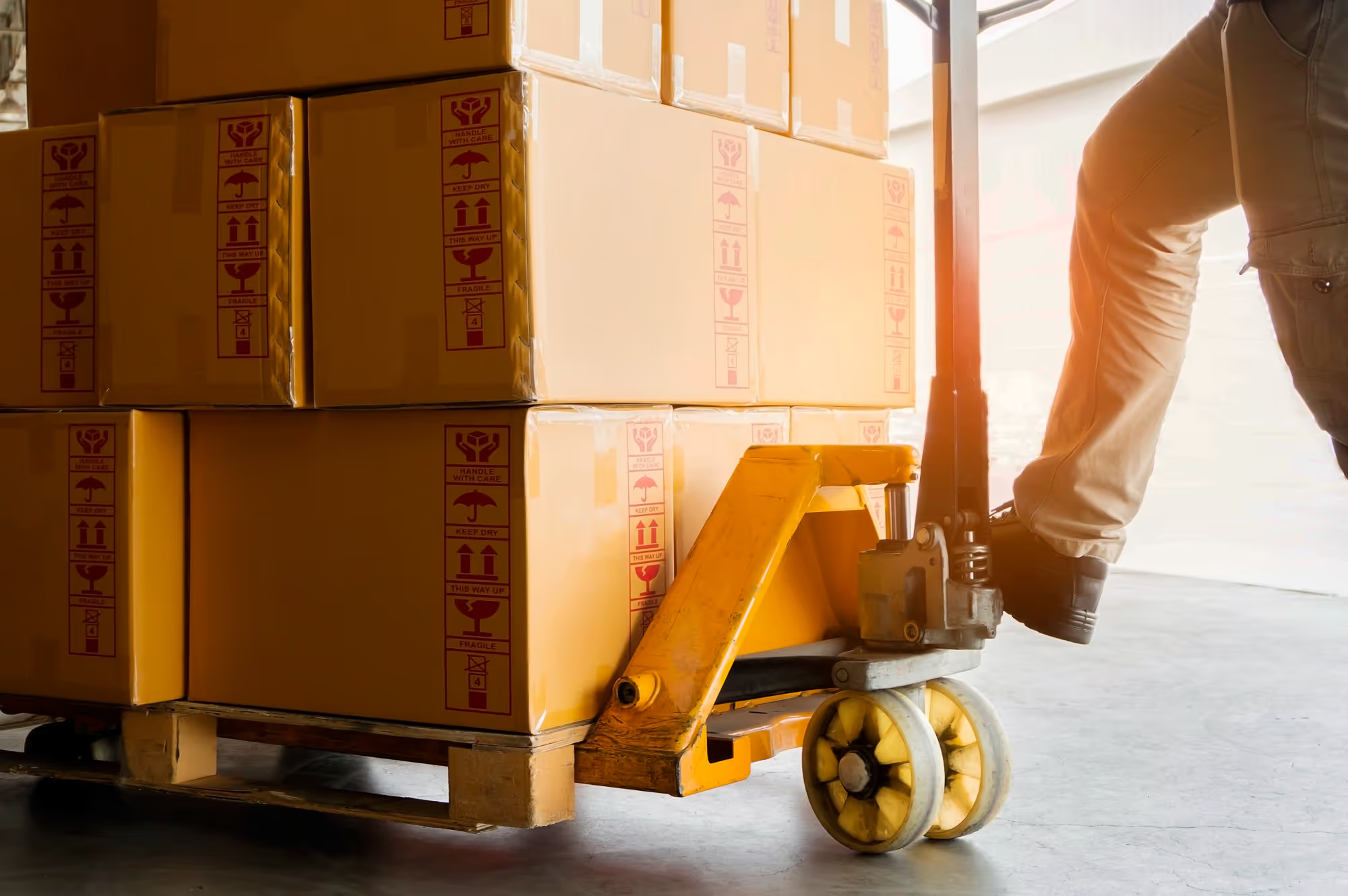
What middle mile logistics is, how it connects warehouses, distribution centers, and fulfillment hubs, and why its performance directly determines last mile success.
Ask most people how a product gets from a factory to their front door and they can sketch out the broad strokes. It gets made somewhere, it gets shipped, and eventually it shows up. What almost nobody thinks about is the stage in between, the movement of freight between facilities, distribution centers, and regional hubs that happens long before a delivery driver ever pulls onto your street.
That overlooked middle stage is called middle mile logistics, and it is where the real performance of a supply chain is determined. Not at the origin. Not at the doorstep. In the middle, where freight volumes are largest, coordination is most complex, and the consequences of getting it wrong ripple through everything that comes after.
The first mile covers the initial movement of goods from the point of origin, typically a manufacturer, supplier, or production facility, to the first major distribution or warehousing point in the supply chain. This stage is about getting freight into the system and positioned for the next leg of its journey. First mile shipments tend to be large in volume, longer in lead time, and focused on bulk movement rather than precise delivery windows.
The middle mile is the transportation of freight between points inside the supply chain, after it leaves the origin and before it reaches its final destination. This stage connects warehouses to distribution centers, distribution centers to regional fulfillment hubs, and fulfillment hubs to last-mile delivery depots. It is the connective tissue of the supply chain, and it operates largely out of sight.
The last mile is the final delivery of a shipment to its end recipient, whether that is a business, a retail location, or a residential address. It is the most visible stage of the supply chain because it is the one customers actually experience. It is also the most expensive stage per unit, driven by the fragmentation of individual deliveries, tight time windows, and high labor requirements.
Each stage has distinct characteristics and demands. Treating them as interchangeable is one of the most common and costly mistakes businesses make when evaluating their logistics operations.
Middle mile freight is typically high-volume and moves in full or partial truckloads rather than individual parcels. The freight being moved during this stage includes:
Middle mile logistics is typically managed by regional trucking companies, dedicated contract carriers, or third-party logistics providers with expertise in facility-to-facility freight movement. The carriers who do this work best are those with deep knowledge of specific freight lanes and the facility relationships to navigate scheduling, loading, and handoffs efficiently.
Middle mile freight moves through a network of facilities that most consumers never see, including cross-dock terminals where freight is transferred between trucks without long-term storage, regional distribution centers that receive bulk inventory and break it down for downstream distribution, and consolidation hubs where freight from multiple origins is combined into efficient outbound loads.
Middle mile operations are built around scheduled, recurring freight runs on defined lanes between specific facilities. A regional trucking company might run the same route between a distribution center and three regional fulfillment hubs every weekday, adjusting load volumes based on inventory levels and demand forecasts. That consistency is what allows downstream operations to plan around predictable freight arrival times.
Middle mile carriers handle a range of load types depending on the client and the freight:
One of the most operationally demanding aspects of middle mile logistics is facility coordination. Distribution centers and fulfillment hubs operate on tight receiving and shipping schedules. Carriers who arrive outside their appointment windows create bottlenecks that affect every other carrier scheduled for that facility. Experienced middle mile operators know how to manage appointment scheduling, dock coordination, and load sequencing to keep freight flowing without creating facility-level disruptions.
Last mile delivery is what customers see and feel. When a package arrives on time, the last mile gets the credit. When it arrives late, the last mile gets the blame. The middle mile operates entirely behind the scenes, which makes it easy for businesses to underinvest in it without feeling the consequences immediately. Those consequences eventually show up downstream, but by the time they do, the connection to the middle mile is often missed.
Middle mile transportation does not directly touch the customer and does not generate revenue on its own. It is a cost center, and cost centers tend to attract scrutiny rather than strategic investment. That mindset leads businesses to optimize for the lowest middle mile cost rather than the best middle mile performance, which creates efficiency losses that far outweigh the savings.
Because middle mile delays show up as last mile failures, inventory shortages, and fulfillment backlogs, the root cause is frequently misidentified. Businesses that keep addressing last mile symptoms without examining their middle mile operations are solving the wrong problem and spending money in the wrong place.
Last mile delivery networks are designed around the assumption that inventory will be available when and where it is needed. That assumption is only valid if the middle mile is placing the right inventory at the right regional facilities on the right schedule. When middle mile freight is delayed or misrouted, fulfillment centers run short, delivery routes cannot be filled, and customer orders get pushed back.
A middle mile delay does not stay contained. It cascades. A late freight arrival at a regional distribution center delays the outbound sort. A delayed outbound sort means last-mile carriers pick up less freight than planned. Fewer packages in the system means missed delivery windows, which means customer complaints and damaged relationships.
Businesses that want to offer faster last-mile delivery need to solve the middle mile first. Positioning inventory closer to end markets faster, which is the foundation of every rapid delivery strategy, requires a middle mile operation that can move freight efficiently and consistently at the volume and cadence the strategy demands. You cannot outrun a slow middle mile with a fast last-mile carrier.
Middle mile logistics is not a background detail in the supply chain story. It is the chapter where the outcome is actually decided. Businesses that understand this invest in middle mile performance with the same seriousness they bring to last mile delivery and customer-facing operations. Those that do not keep solving downstream symptoms without addressing the upstream cause.
At Isaacs Logistics, middle mile transportation is our specialty. We operate throughout the Southeastern U.S. with the regional expertise, carrier relationships, and problem-solving mindset that middle mile freight demands. Whether you need dedicated lane coverage, supply chain coordination, project-based logistics support, or a partner with experience in federal freight transportation, we are built for the work that happens in the middle.
Call us: (662) 722-2233 Email us: Info@isaaclogistics.com Visit us: 107 Mercer Dr., Simpsonville, SC 29681
Whether you're looking for a logistics partner, a government-ready contractor, or a team that simply gets things done — we'd love to hear from you.